Wednesday, February 9, 2011

Chinese New Year

I celebrated CNY in France!
It was a dumpling feast over several days... no more jiaozi...
Happy Year of the Rabbit!

Boiled dumplings

Largest carrot ever

Beef, Onion & Carrot (w/ soy sauce, oyster sauce, Chinese peppercorns)

 
Carrot, Egg & Chinese mushrooms (w/ soy sauce, oyster sauce, Chinese peppercorns)


These are grilled dumplings, Chinese-style.
They are folded slightly differently from the boiled ones, the ends are left open:


Ovens are non-existent in China - in this way, you put oil in the pan, enter the dumplings, pour water over & cover for around 7mins:


Thank you to my French-Chinese family!
Where's my jacket?!


Monday, February 7, 2011

Royal Palace

The palace is built in baroque style by the architect Nicodemus Tessin and is formed as a Roman palace. The palace has more than 600 rooms divided between seven floors.
The Royal Apartments contain the state rooms that are used at the King & Queen's receptions, and a huge banquet hall. All very sumptuous & luxurious rooms, ala Versailles.
The guest apartments are actually still used as a residence for foreign dignitaries on official state visits. 
They were closed to visitors a few weeks ago for the President of Estonia's stay.

I also visited the Treasury vaults of royal regalia.


Vasa

Vasa was a Swedish warship built between 1626-1628. 
It was commissioned by King Gustav II Adolf for the Thirty Years War.
On Sunday the 10th of August 1628, cannons were fired & the Vasa set off on its maiden voyage. 
All was well for the first 1250m, until there was a bit of wind & it tipped over. Hilarious.
Water came rushing in through the open gunports & it quickly sank:


On the 14th of April 1961, the Vasa returned to the surface - 333 years later.
It had been located 5 years earlier by Andres Frazen & Per Edvin Falting, who had in turn been searching for it & other famous shipwrecks for a number of years.
Six tunnels were cut through the clay under the ship with special water jets. 
Then steel cables were drawn through the tunnels & taken to two lifting pontoons on the surface, which were to pull the ship free.


The diver's equipment weighed nearly 100 kilos.
The suit is a one-piece unit of thick canvas with a middle layer or rubber.
In order to drive the cables through the tunnels, the divers had to go down to a depth of approx. 40m.
The temperature there was 4c.


Conservation of such a large wooden structure had never been attempted before. 
A lot of the techniques used were experimental.
For 17 years, the Vasa was sprayed with PEG (polyethylene glycol) - a chemical compound that replaces the water in waterlogged wood to prevent shrinking & cracking.
Unfortunately, this also stripped the wood of all its paint & colour, that had actually remained intact for 333 years. 
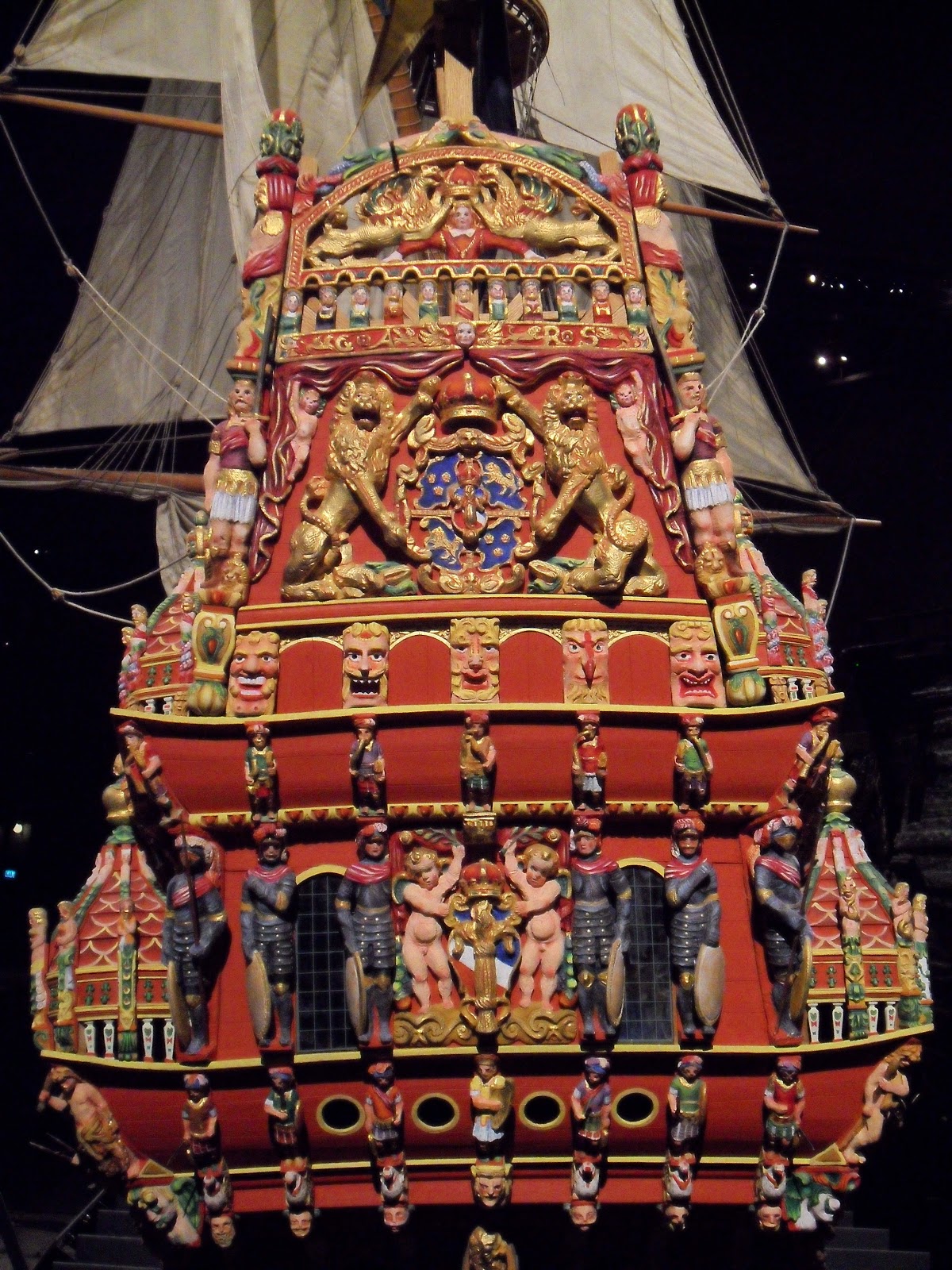
Here's a model of what the ship actually would have looked like: 


Over 40,000 objects were found within the Vasa.
Most were stored in water tanks while waiting for conservation.
Here are examples of some of the restored sculptures that adorned the ship: to express the power, strength & glory of Sweden & the King:


Approximately 150 people were on board, of which around 30 died. 
The remains of at least 16 skeletons were found during excavations of the ship.
None of the bodies have been able to be identified but through the study of osteology, researchers have come to probable conclusions about their appearances, etc.


An inquest into the disaster was held immediately after the sinking.
No charges were laid, however nowadays most blame is attributed to the Captain.
Just before the Vasa sailed, tests were undertaken that proved the ship was extremely unstable.
But ultimately, the Vasa was built top heavy but with an insufficient ballast, the lower gunports were poorly designed & laid just above the surface & should've been closed:


7 months after the salvage, the Vasa moved into a provisional museum, the Wasa Shipyard.
In 1988 the Vasa makes one final journey to a new home, & the Vasa Museum is officially opened on June 15 1990.
It is the largest wooden ship in the world:


Saturday, February 5, 2011

African Feast

Berbere is the key to authentic African cooking.
It consists of garlic, red pepper, cardamom, coriander, chilli, cloves & various other spices - cayenne pepper is often used as a substitute, but here is the real thing:


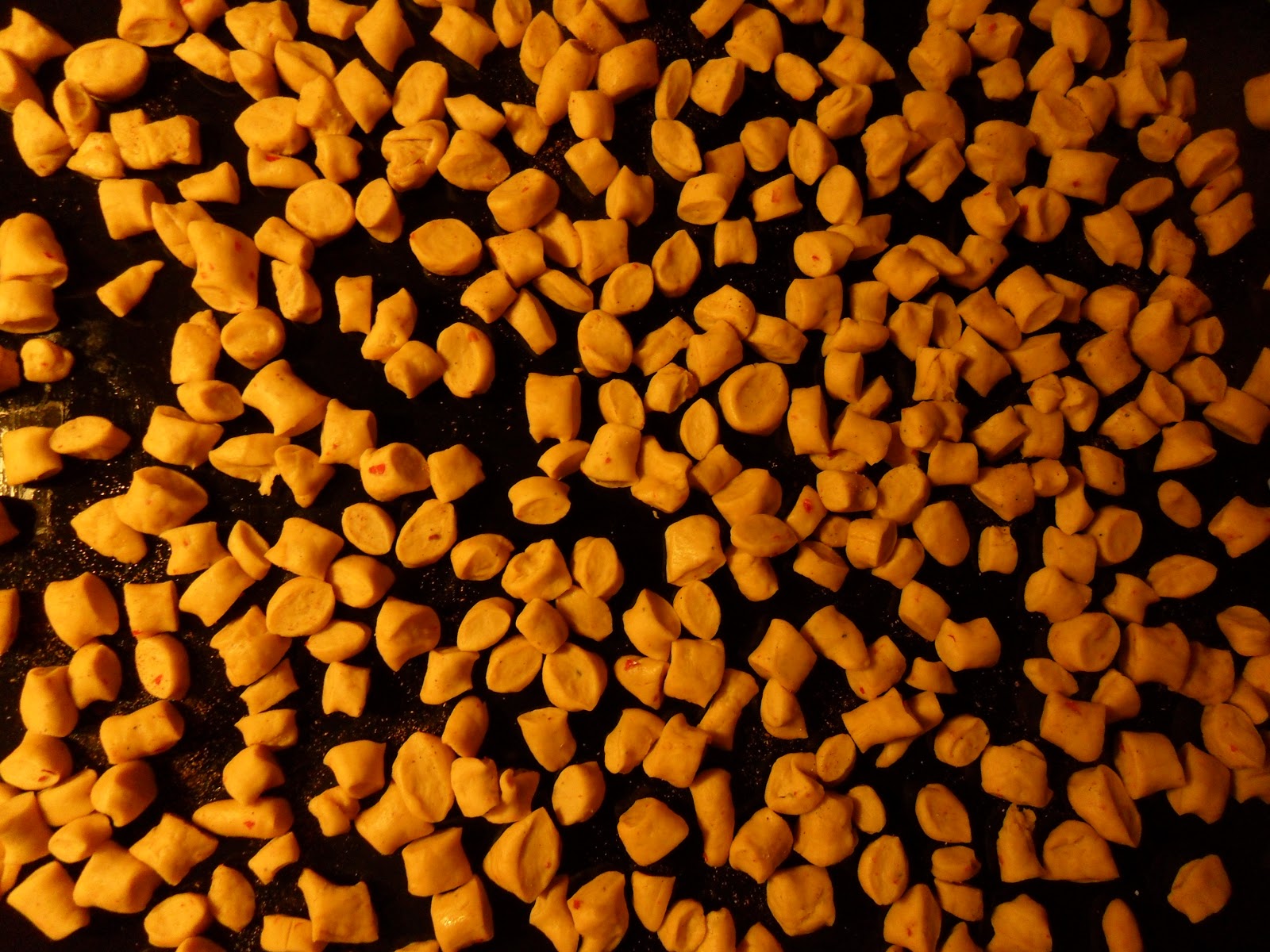
Dabo Kolo is an Ethiopian snack, meaning something like "popcorn bread."
It can be pretty spicy, depending on how much berbere or cayenne pepper is used.
Addictive too:


Injera is the national dish of Ethiopia.
It took 2 days to prepare: the dough had to be left to rest, rise & ferment, to give it its 
sour taste & spongy texture.
It was made somehow without the main ingredient (teff flour, not available in Sweden) 
but it tasted & looked pretty cool:


This is the dreaded ugali, the bane of my existence in Africa.
It's all over the East, & South Africa where it's called pap.
Made from maize flour, cooked with water till it has a dough-like consistency - very starchy & tasteless, wasted carbs & almost no nutritional value.
Thankfully you can't get maize here either but unfortunately corn flour was found
to be a substitute.
At least we didn't have to make the spinach crap with it:


The bottom pot is my vegetable lentil stew - not bad that I made 2/6 dishes,
Dabo Kolo was mine too.
This was a Kenyan recipe, with the berbere playing a starring role yet again:


The other pot is Doro Wat, the classic Ethiopian spicy chicken stew.
It's also made with berbere, & niter kibbeh (spiced clarified butter).
Eaten with injera, you break off small pieces of it with your right hand off & use the injera to scoop up the stew, with the injera soaking up all the juices & flavour.
So in this way, injera is food, cutlery & plate at the same time:


The traditional way of eating ugali is to roll a lump of it into a ball with your right hand 
& dip it into stew/sauce. 
Or you can press into it with your thumb & use it as a scoop, or to fold into it pieces of meat/stew.
It looks like crap / very authentic:


Roasted Ethiopian coffee & sweet potato muffin:


If African meals were 3 courses, 7 dishes, cocktails, wine & coffee,
it would look something like this!

Friday, February 4, 2011

Venice of the North

That's what Stockholm is sometimes called...
It is located on the south-central east coast of Sweden, where Lake Malaren (from Sodertalje) meets the Baltic Sea. 
The central parts of the city are spread out over 14 of the 24,000+ islands of the Stockholm archipelago.
As the slogan says, it really is "Beauty on Water"...

These images were taken from City Hall on Kungsholmen island, of Sodermalm:


Over 30% of the city area is made up of waterways (& another 30% is parks & green spaces).
Winter is not really ideal for island-hopping unfortunately... I love the snow & have even gotten used to the cold, but summer here would also be very nice in different ways:


Gamla Stan

Gamla Stan is the Old Town of Stockholm.
The town dates back to the 13th century, consisting of medieval alleyways & cobbled streets, with lots of touristic cafes, restaurants & shops, especially along the main strip, Vasterlanggatan.
I like the stucco walls of the old red, orange & vanilla buildings, all leaning into each other:


Stortorget is the name of the main square in the centre of Gamla Stan.
The Nobel Museum, Royal Palace, Stockholm Cathedral, etc are all around here.
This was also the site of the Stockholm Bloodbath, where Swedish noblemen were massacred by the Danish King Christian II in November 1520:


Gamla Stan is on the island of Stadsholmen.
It was officially known as "the city within the bridges" until 1980: